Swimming Lessons With Swimming Without Stress
links

website:
terms of use | privacy

payment:
safe online shopping starts with shopsafe
secure payment Secure Payment using:
protx payment gateway
PayPal

VisaSwitchSoloAmerican Express
DeltaVisa ElectronMastercard


design:
boxhedge.com


Swimming Advice: useful articles


try swimming

If you are new to running and want to lose weight, swimming can help. Swimming may even be a good activity to get into before starting a running programme. Swimming can be an integral part of your training programme or an occasional “adventure into a different world.”

Here are some of the benefits

1. Loosening up
You’ve got to do this if you want to move well in water. Runners often have tight muscles. Swimming should improve your flexibility. For swimming, limbs need to be long, loose and ex tending out of free joints. The range of movement of any joint is greater when supported b y water. When learning, for example, backstroke kick, runners often have difficulty letting go of the hamstrings and allowing the ankles to be free. For movements like this to work, you have no choice but to loosen up in a way that doesn’t feel normal so wouldn’ t otherwise happen . Suppleness reduces the risk of injur y and may improve your running style.

2. Taking the pressure off
People in the medical prof ession see swimming as the safest form of exercise because there should be no downward pressure on any of the joints and no jarring of the internal organs. If you have a running injury, swimming can be a great way to maintain aerobic fitness. Physiotherapists recommend movement in water as a useful part of the therapeutic process for patients recovering from injury. It is, however, important to remember to release your head into the water, look down and breathe out. Swimming with the head held out of the water compresses the spine, restricts breathing and forces the body int o an unnatural alignment.

3. Slowing down
Slowing down in water is inevitable. Just standing in water causes your metabolism to slow down. An elite sprinter will cover 100 metres in less than 10 seconds. A swimmer of the equivalent standard will take roughly 5 times longer to cover the same distance. Working against the resistance of the water builds muscle and gives you a cardiovascular work out but it should also relax you at the same time: give yourself up to a power greater than yourself and allow water to slow you down. Running, particularly for the average level runner, can have the opposite effect, putting you into a state of overdrive.

4. Learning breathing and relaxation
Aquatic breathing will give you a wonder ful combination of energy and relaxation. It works by emphasising the out-breath and letting the in-breath do itself. Focusing on the in-breath cannot work in water. So swimming can teach runners the principle that in order to breathe in, all we need do is let enough air out. This is very useful for runners to bear in mind and if running is your discipline, you don’t need to be too competitive about swimming. “With the right mental approach experiences may be encountered which are normally associated with the practice of yoga, tai chi and meditation. In the latter context, it is interes ting to speculate how the ar t of swimming would be regarded now if hitherto unfamiliar to Western Culture, it had been introduced from the East only within the last few decades.”

5. Losing weight the easy way
If you are new to running and want to lose weight, swimming can help. Swimming may even be a good activity to get into before starting a running programme. This is because it can be difficult for new runners to achieve the level of gentle aerobic exercise needed either to lose weight or s tart a fitnes s programme when unfit. To burn fat, we need to exercise continuously, elevating our heart rate but staying well within our aerobic limits, a few times a week. If you are planning to take up running for fitness, to start with you may be unable to run long enough at the right aerobic level for weight loss: it is difficult not to overdo it. This is why GPs like to check your heart if you are over 35 and want to start running. Swimming can be a very easy way to lose weight. 20 minutes gentle breaststroke (breathing out into the water) – may elicit HR of 120 bpm while feeling like a stroll in the park. Tr y keeping your HR this low on a run! A real stroll in the park, on the other hand, won’t give you enough of a work out.

6. Looking better
With a balanced swimming programme, almost every muscle in the body responds. “It’ s great for your back, the best general all ro und exercise. You get a nice, even development of the whole body, arms and legs.(3) Improving your lung capacity through aquatic breathing improves your appearance as well as your running. With better elimination of toxins, your complexio n will change. Swimmers often appear fresh faced and younger than their years.

7. Letting the head lead
Horizontal movement, with your head in the water and eyes down, is a good way to learn the movement principle of the head leading the spine. Gliding is good for the back as the spine can lengthen as the head leads it forward in a fishlike way. In running, the head needs to lead the spine upwards, so that the spine lengthens as you move, and this idea is easier to grasp in the water. Swimming can be a relief from the challenge of being upright against gravity. When you are tired at the end of the run, the head will sometimes be twisted down into the shortened neck. Gliding can help you undo this.

8. Challenging yourself mentally
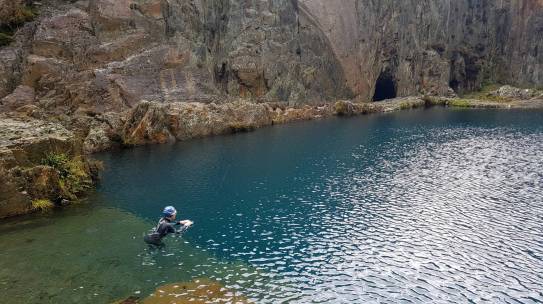
To learn a new skill in water, you have to go right back to basics and may discover all kinds of things about yourself. For example, why is there such a strong tendency to pull the arms all the way back to the hips in breaststroke instead of sculling and gliding? The process you need to go through to overcome tension patterns and instinctive responses is very useful for the brain and may give you new awareness for your running. 9. Swimming in the rain No excuses to miss a pool session on a bad weather day. And open water swimming in the rain is a great experience. 10. Treating yourself during a run on a hot day Francis Kilvert, a curate in Wiltshire in 1860 wrote about “the delicious feeling of freedom in stripping in the open air and running down naked to the sea, where the waves were curling white with foam and the red morning sunshine glowing upon the naked limbs of the bathers”

© Copyright swimmingwithoutstress.co.uk

Top of Page


swimming without stress reviews
swimming shop
swimming advice
swimming holidays
swimming lessons